Shivala Ghat is one of the most revered and historically significant ghats along the sacred banks of the Ganges in Varanasi. Nestled between Assi Ghat and Darbhanga Ghat, it has been a centre of spiritual devotion, royal patronage, and cultural continuity for centuries. Today, under the stewardship of ShivBodh Trust, Shivala Ghat continues to serve as a living bridge between Varanasi's ancient heritage and the devotional needs of modern pilgrims.
Mythological & Historical Background
The name "Shivala" is derived from the Sanskrit words Shiva and alaya, meaning "abode of Lord Shiva." According to ancient Puranic accounts, this ghat has been a site of Shiva worship since time immemorial. The lingam enshrined here is believed to have been consecrated by Lord Rama himself during his return to Ayodhya after the slaying of Ravana.
King Balwant Singh (1740–1770)
The ghat's prominence rose dramatically during the reign of King Balwant Singh of Benaras (r. 1740–1770). A devout Shaivite and patron of the arts, Balwant Singh invested heavily in the renovation and beautification of Shivala Ghat. He commissioned the construction of the grand stone staircase descending to the river, the ornate Shiva temple crowning the ghat, and several smaller shrines. His patronage transformed Shivala Ghat from a modest bathing place into one of Varanasi's most magnificent riverfront complexes.
Budhwa Mangal Festival
Shivala Ghat is the focal point of the annual Budhwa Mangal fair, one of Varanasi's most vibrant folk festivals. Held every Tuesday during the Hindu month of Chaitra (March–April), the festival sees hundreds of thousands of devotees throng the ghat to offer prayers to Lord Shiva. The atmosphere is electric with devotional music, processions, and the fragrance of sandalwood and flowers. This centuries-old tradition links Shivala Ghat to the living religious fabric of the city.
Brahmendra Math
Adjacent to the ghat stands the historic Brahmendra Math, a monastic institution dating back several centuries. Associated with the Dwaita (dualist) philosophical tradition of Madhvacharya, the math has been a centre of Sanskrit scholarship and Vedic education. Its presence at Shivala Ghat underscores the ghat's importance not merely as a bathing site but as a hub of theological learning and spiritual practice.

Architecture & Structure
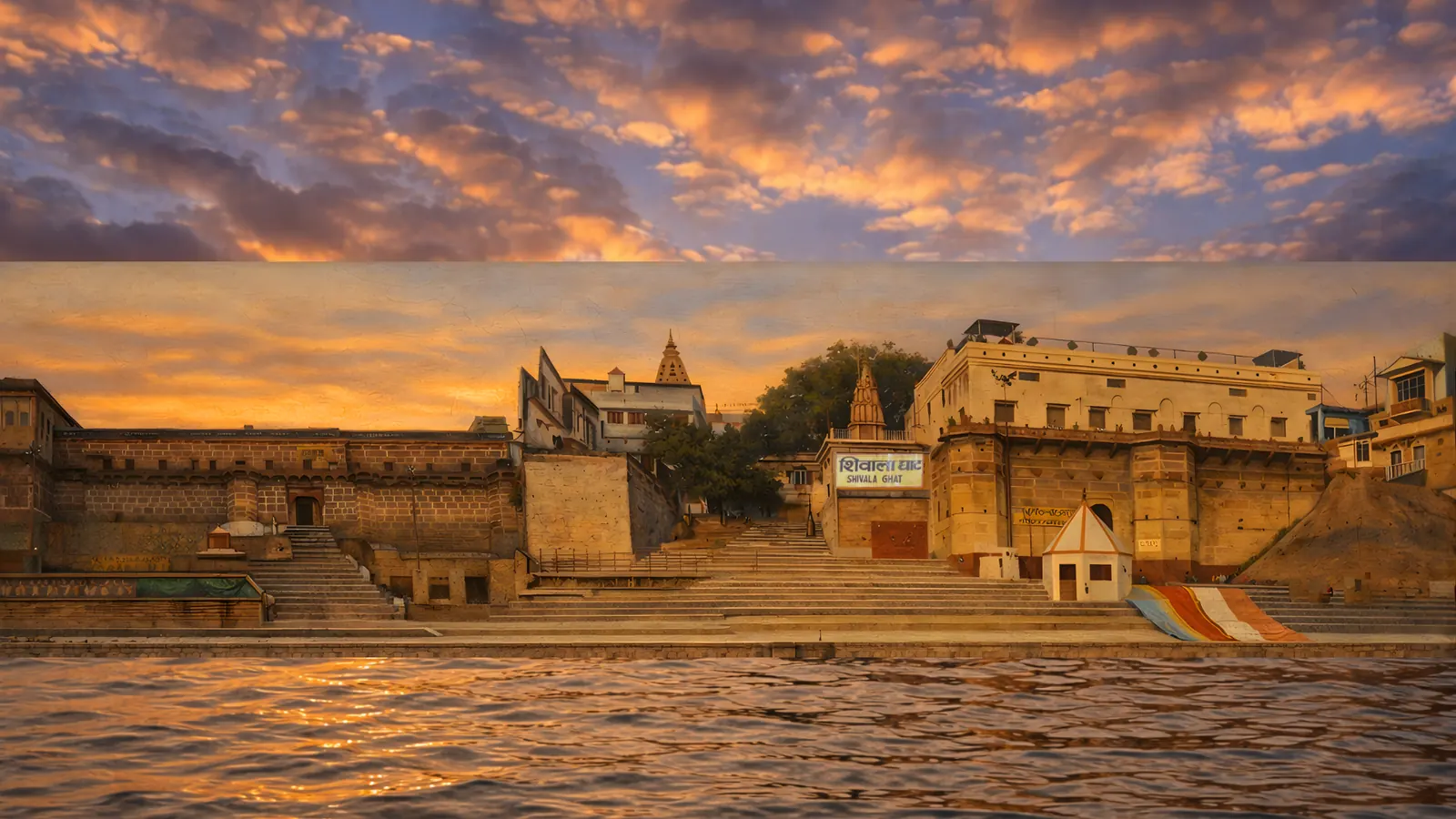
The present stone structure of Shivala Ghat dates largely from the late 18th and early 19th centuries, with significant renovations carried out in 1988 by the Varanasi Nagar Palika. The ghat features a broad set of sandstone steps — among the widest of all Varanasi ghats — descending gracefully to the river. At the top of the steps stands the main Shiva temple, built in the classic Nagara style with a towering shikhara (spire) adorned with intricate carvings.
The Nepali Raja's Palace
A distinctive feature of Shivala Ghat is the Nepali Raja's Palace (Nepal Mandir), built by the King of Nepal in the early 19th century. This remarkable structure blends Nepali pagoda-style architecture with traditional North Indian temple forms. The multi-tiered wooden roof, carved wooden struts, and the overall aesthetic set it apart from the surrounding stone buildings. It stands as a testament to the cultural and diplomatic ties between Varanasi and the Nepali court.
Shrines and Sacred Structures
Beyond the main Shiva temple, the ghat complex houses several smaller shrines dedicated to various deities. Notable among these are shrines to Goddess Annapurna, Lord Ganesha, and Surya (the Sun God). The ghat also contains a cluster of ancient lingams along its western edge, many of which predate the current stone construction. The entire complex is marked by ornate stone railings, carved pillars, and inscriptions in both Sanskrit and Hindi that chronicle centuries of devotion.
Present Scenario
In recent decades, Shivala Ghat has undergone a remarkable transformation under government and civic initiatives. The Swachh Ganga (Clean Ganga) campaign has brought improved sanitation, waste management systems, and cleaner bathing platforms to the ghat. The water quality of the Ganges at this stretch has shown measurable improvement thanks to the Namami Gange programme.
Tourist and pilgrim footfalls have seen extraordinary growth. According to Uttar Pradesh Tourism data, Varanasi received 5.48 million visitors in 2014. By 2024, that figure had surged to an astonishing 146.9 million — a nearly 27-fold increase in a decade. Shivala Ghat, with its accessible location and serene ambience, has been a significant beneficiary of this influx, drawing both domestic pilgrims and international visitors drawn by its spiritual and architectural heritage.
The Aarti at Shivala Ghat
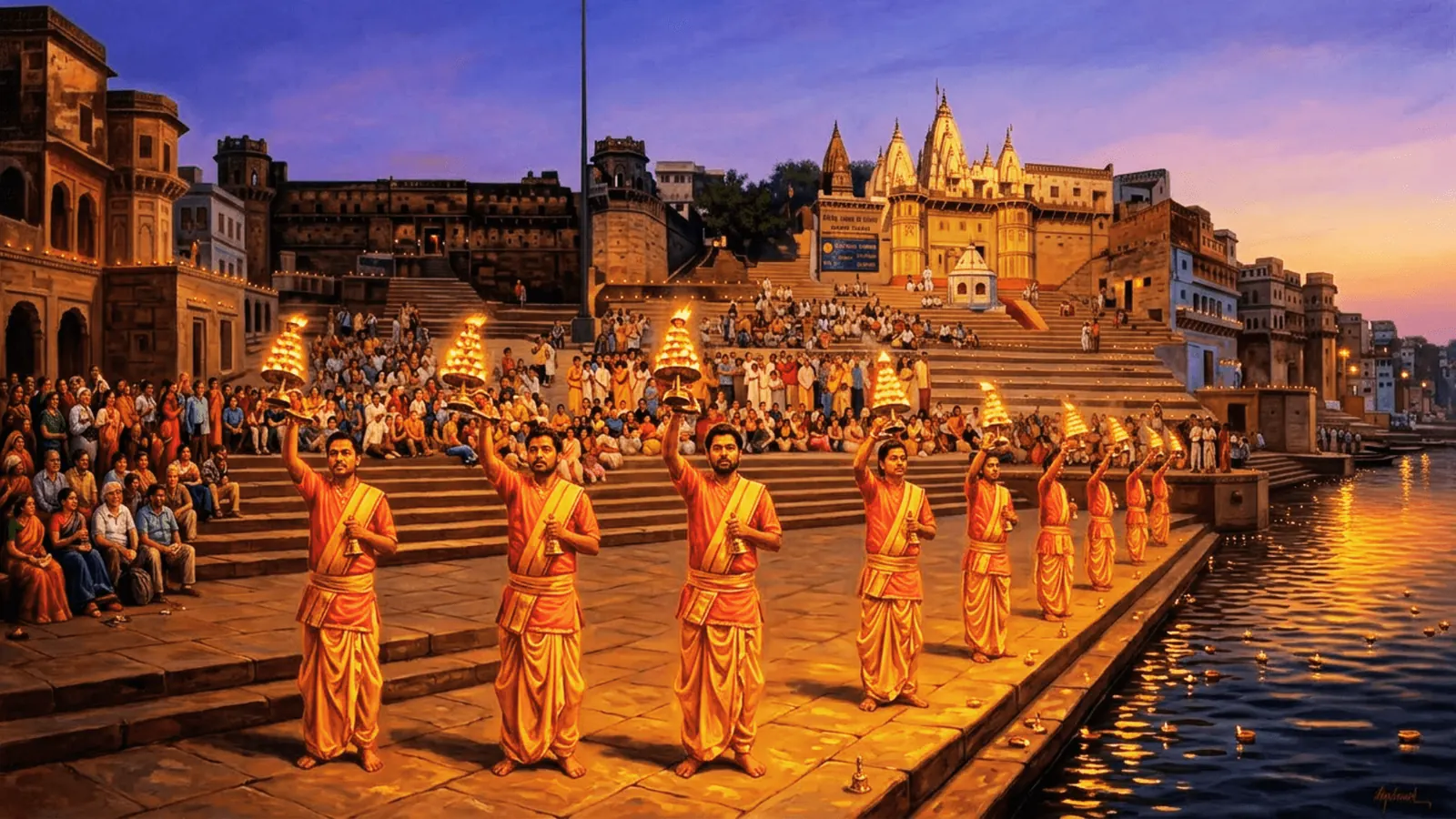
The ShivBodh Trust performs the daily Ganga Aarti at Shivala Ghat — a deeply moving Vedic ritual offered to Goddess Ganga at sunset each evening. Unlike the more commercialised aarti ceremonies at Dashashwamedh Ghat, the Shivala Ghat aarti retains an intimate, devotional atmosphere where every participant feels personally connected to the divine.
As the first flames rise against the twilight sky and the conch shells sound across the waters, the soul of Varanasi awakens at Shivala Ghat.
Aarti Timings
- Morning Aarti: 5:30 AM – 6:30 AM (Brahma Muhurta)
- Evening Aarti: Sunset – approximately 6:30 PM (Summer) / 5:45 PM (Winter)
- Duration: Approximately 45 minutes
- Admission: Free and open to all devotees
Nearby Ghats
Shivala Ghat is flanked by several other historically significant ghats, each with its own unique story:
Gularia Ghat (1819)
Located just south of Shivala Ghat, Gularia Ghat was constructed in 1819 by Rani Gularia of the Maratha court. The ghat is known for its distinctive gular (cluster fig) trees that once lined its banks, giving it its name. It features a well-preserved Shiva temple and is a quieter, more contemplative space compared to the busier ghats nearby.
Dandi Ghat (1821)
To the north of Shivala Ghat lies Dandi Ghat, built in 1821 and historically associated with the Naga sect of ascetics (sadhus) who carry wooden staffs (dand). This ghat was traditionally used by these wandering monks for ritual bathing and has retained its character as a place of austere spiritual practice. The ghat's simple architecture contrasts with the ornate structures of Shivala Ghat, offering visitors a glimpse into the varied spiritual traditions of Varanasi.
Practical Information
Best Time to Visit
The ideal months to visit Shivala Ghat are October to March, when the weather in Varanasi is pleasantly cool and dry. The monsoon season (July–September) brings heavy rains and swollen rivers, while summer months (April–June) can exceed 45°C. For the most spiritual experience, visit during the early morning Brahma Muhurta aarti or the evening sunset aarti.
How to Reach
- By Air: Lal Bahadur Shastri International Airport (VNS) is approximately 22 km from Shivala Ghat. Prepaid taxi and auto-rickshaw services are available at the airport.
- By Train: Varanasi Junction (BSB) is about 6 km away. The route to the ghat passes through the old city's narrow lanes — an experience in itself.
- By Road: Auto-rickshaws, cycle-rickshaws, and e-rickshaws are the most practical way to reach the ghat from any point in the city. Entry to the immediate ghat area is on foot only.
Tips for Visitors
- Remove footwear before ascending the ghat steps. Shoe-keepers are available near the entrance for a nominal fee.
- Carry a small towel or cloth for the evening aarti — the splashing of Ganga water is part of the ritual blessing.
- Photography is welcome, but be respectful during active prayers and avoid flash photography.
- Local guides and priests can help explain the significance of various rituals and shrines. A modest donation is customary for their services.
- The steps can be slippery when wet. Wear comfortable, non-slip footwear for the walk to and from the ghat.
Conclusion
Shivala Ghat stands as a testament to Varanasi's eternal spirit — where mythology, history, architecture, and living faith converge on the banks of the Ganges. Whether you come to witness the mesmerising Ganga Aarti performed by ShivBodh Trust, to explore the architectural marvels of the Nepali Raja's Palace, or simply to sit by the water and feel the timeless pulse of the city, Shivala Ghat offers an experience that transcends the ordinary.
Har Har Mahadev
ॐ नमः शिवाय